
When a range hood stops clearing the air, or the fan and lights go dead, start with the parts you can reach: the grease filters, the light fittings, and the controls. Whirlpool's range hood maintenance checklist puts regular filter cleaning at the centre of airflow, and Broan-NuTone's help page for a light that isn't working starts with the lamps, the size and type, and the power to the hood before any control replacement.
A hood that sits over a gas range still needs that first safety check. If the cooktop or the room smells of gas, don't turn the hood on or off. If you smell gas, leave the home right away without using light switches, phones or anything that could spark, then call FortisBC at 1-800-663-9911 or 911 from outside. If there's no gas smell, the owner checks below are safe to try. For service in Surrey, Langley, White Rock or Delta, range hood repair in Surrey covers the fan, lights, controls and duct work.
Key Takeaways
- If you smell gas, leave the home right away without using light switches, phones or anything that could spark, then call FortisBC at 1-800-663-9911 or 911 from outside.
- Whirlpool treats clean grease filters as the first step when a hood isn't moving air.
- Broan-NuTone starts a dead light with the lamps, the correct replacement type, and power to the hood.
- A hood that hums but barely pulls usually has packed filters or a restricted duct, not a new motor, at least at first.
- Natural Resources Canada lists ventilating fans among the products that can carry an ENERGY STAR mark, which is about efficiency rather than a repair method.
A ducted hood is one that sends air outside through a damper and a cap. A recirculating hood is one that pushes air through a charcoal filter and back into the room. A damper is the flap that should open when the fan is on and close when it's off. Weak suction with a loud fan, for example, often starts with packed filters or a restricted duct.
What the symptom is telling you
| What you notice | Try first | Book a visit if |
|---|---|---|
| Fan and lights are both dead | The hood's switch, a wall switch, and the breaker | Power is present and nothing responds |
| Lights work, fan doesn't | The fan speed control and the filters | The fan stays silent or only hums |
| Fan works, lights don't | The lamps and whether they're seated, as Broan-NuTone describes | New lamps of the correct type still fail |
| Fan runs but smoke hangs in the kitchen | Clean or replace the grease filters; check a visible damper | Airflow stays weak after the filters are clean |
| The hood is unusually loud or rattles | A loose filter or a grease cup that isn't seated | The noise continues with the filters out |
Checks to try before you call
Do these with the hood off and the cooktop cool. If the hood is hard-wired, use the breaker when you need to cut power.
- Confirm the hood actually has power. Try the wall switch, if there is one, and check the breaker.
- Turn the light and the fan on separately, at more than one speed, so you know which function has failed.
- Remove the grease filters and wash mesh filters in warm soapy water, or replace a disposable pad if that's what your hood uses. Whirlpool's maintenance checklist treats this as regular care, and it shouldn't wait until the hood has already failed.
- Let the filters dry fully before you put them back, and seat them so they don't rattle.
- If only the lights have failed, check the lamps against the type and wattage in your manual. Broan-NuTone warns that the wrong lamp, or a lamp that isn't fully seated, can leave the light out.
- If you can see the duct damper where the hood meets the cabinet or the wall, look for a damper that's stuck shut or a heavy grease buildup at the opening. Don't take the duct apart in the ceiling.
- Try the hood again. If the fan still won't run, or the air still hangs in the room with clean filters, stop and book a visit.
Why a hood loses suction
Grease filters do most of the everyday work. Once they're packed, the fan can sound busy and still move very little air. A long, crushed, or undersized duct, a damper that doesn't open, or a roof cap that's blocked by debris can do the same thing. Those duct problems are common in older kitchen renovations, and they aren't fixed by a new set of filters.
Motors do fail, especially on hoods that have run over dirty filters for years, but a motor is the later check, after the filters and the damper. A technician can measure airflow, inspect the blower, and look at the accessible duct connection without tearing out cabinets on the first visit.
Natural Resources Canada's ventilating fans page is useful if you're comparing a replacement hood, because some fans carry an ENERGY STAR mark. It doesn't change the repair sequence on the hood you have now.
Lights, controls and unusual noises
A dead light is often just a lamp. It's worth fitting the correct type before you assume a failed ballast or LED driver. If the new lamps don't work, or only one of several sockets is dead, the wiring or the control is next. Don't bypass a heat lamp or a fluorescent ballast with a random LED unless the manual says that type is approved.
A rattle is often a filter that isn't seated, or a grease cup that's loose. A grind or a squeal that continues with the filters removed is more likely a blower bearing or a foreign object in the wheel, and that's a technician job. Switch the hood off if the fan smells hot or the breaker trips.
Ducted hoods and recirculating hoods
A ducted hood sends air outside through a damper and a cap. If that path is crushed, too long, or blocked at the roof or wall cap, clean filters won't restore the draw. A recirculating hood, often used where a duct isn't practical, pushes air through a charcoal filter and back into the room. Those charcoal filters need regular replacement; washing a mesh grease filter alone won't help the odour filter. Your manual says which type you have. If you're not sure, a technician can tell from the cabinet or the top of the hood.
Don't join a hood duct to a dryer vent or a furnace pipe, and don't leave a flexible duct sagging in a cabinet. Those setups are common in rushed renovations, and they cut airflow and can push grease or moisture where it shouldn't go. If you can see an obvious crush or a disconnected joint in the cabinet above the hood, that's worth flagging on the booking, but leave the disconnection itself to the visit if it involves the roof or an outside cap.
After a renovation or a new cooktop
Hood complaints often show up right after a new range is installed, especially a higher-output gas range under an older, quieter hood. The hood may be working the way it always did, and simply be undersized for the new cooktop. That's a sizing and duct question, not always a failed motor. If the hood used to clear the kitchen and suddenly doesn't, go back to the filters and the damper first. If the change started the day a new appliance went in, mention that when you book.
Make-up air is worth a mention in tight, newer homes. A powerful hood can struggle if the kitchen has no way for replacement air to enter, and the fan will sound as if it's working while the smoke still hangs. That's a house and duct design issue as much as a hood issue. A technician can tell you whether the hood itself is moving air at the filter opening. If it is, and the room still smokes, the rest of the path, or the way the house is sealed, needs attention too.
When to book range hood repair
Book a visit if the fan or lights stay dead after you've confirmed power and the lamps, or if suction is still weak after the filters are clean. The visit starts with a $100 diagnostic, which is credited toward labour if you go ahead with the repair. After the diagnosis you get a parts-and-labour quote. If you decline, you pay only that $100 diagnostic. Sealed-system and other specialty jobs are quoted after the visit, as our rates page explains. Completed repairs carry a 3 month guarantee on parts and labour.
If the cooktop under the hood is the part that's failing, see gas stove flame flickering or oven not heating. Brand patterns across kitchens are in which appliance brands break down most.
Frequently asked questions
Why is my range hood not working? If the whole hood is dead, check the breaker and any wall switch first. If the lights work and the fan doesn't, the motor, capacitor or fan switch is the usual next step. If the fan runs but the air is still smoky, start with the filters, then the duct.
How often should I clean a range hood filter? Whirlpool's range hood maintenance checklist says ductless hoods usually need filter care at least twice a year, and monthly if you use the hood every day. Metal grease filters are typically washable. Charcoal filters should be replaced every six months and can't be washed. Follow the manual for your model.
Can I put the filter in the dishwasher? Many metal grease filters can go in the dishwasher, but Whirlpool says to check the owner's manual first. Charcoal filters can't go in the dishwasher.
Is it worth repairing a range hood? If the shell and ductwork are sound, a motor, switch or lighting repair is often the practical choice. A hood with a crushed duct, a badly corroded housing, or no way to vent outside may need a different conversation after the diagnosis. If you're replacing the hood, Natural Resources Canada notes that ENERGY STAR certified ventilating fans, a category that includes range hoods, use 70% less energy on average than a standard model when the unit includes lighting.
To book a visit, use the online booking form or call 778-488-8751.
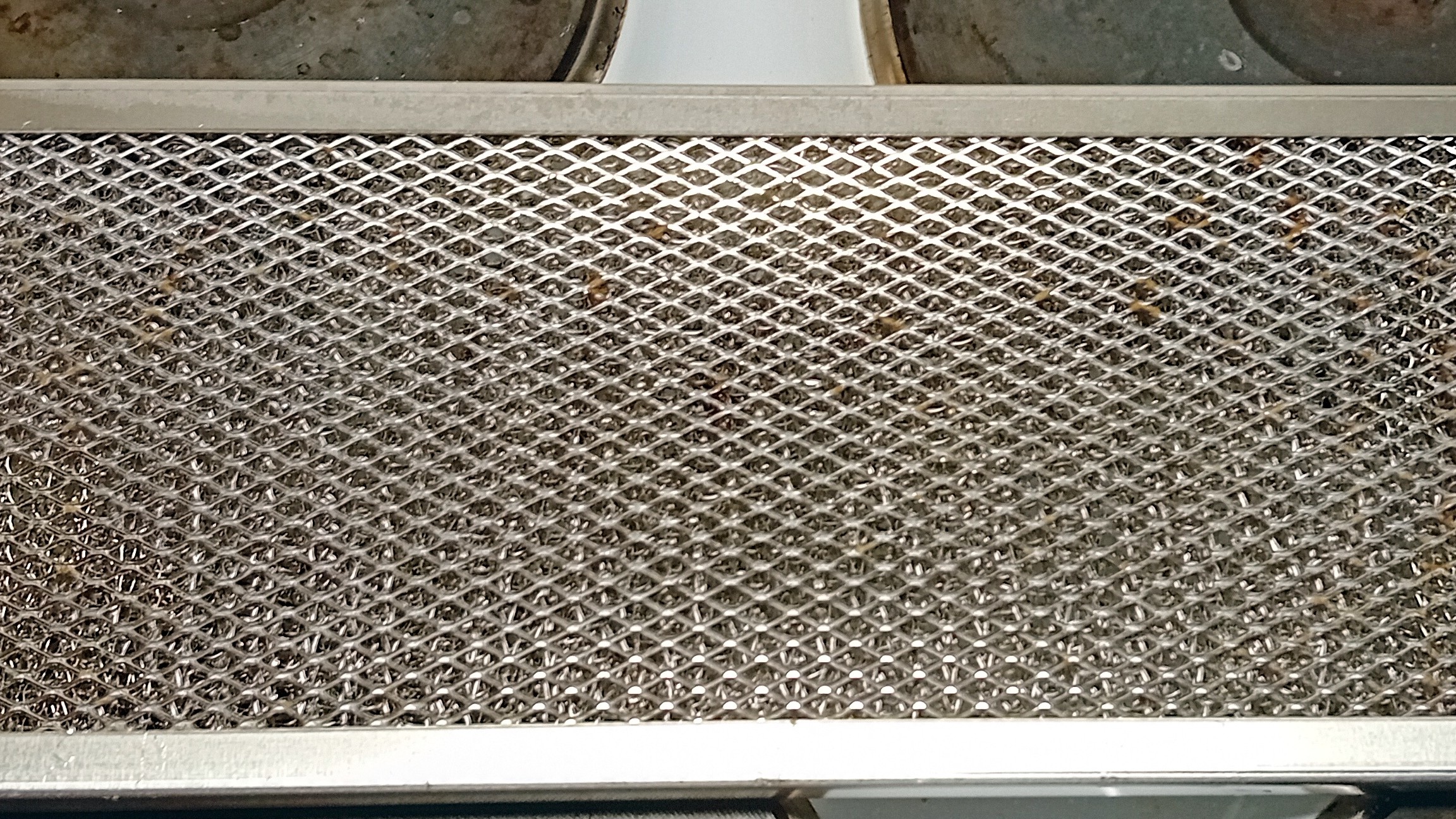
In-body photo: Kitchen hood filter after being washed in a dishwasher.jpg by Unknown author, CC BY-SA 4.0.
Featured image: Shimizu Kitchen Design by Rikayon, CC BY-SA 4.0.
