
If the fridge section is warm, start with the simple checks the brands and health agencies already publish: the temperature setting, the vents, the door seal, and the condenser coils. Whirlpool's help page for a refrigerator section that isn't cooling starts with the controls, blocked vents, and a door that isn't closing, before any sealed-system talk. Food safety comes first while you work through those steps.
Health Canada's safe food storage guidance is to keep the refrigerator at 4 °C or below and the freezer at -18 °C. If the fridge has already been warm for hours, move perishable food, or use ice in coolers, rather than leaving it on the shelves to hope it recovers. For service in Surrey, Langley, White Rock or Delta, refrigerator repair in Surrey is the next step when the checks below don't bring the temperature down.
Key Takeaways
- Health Canada advises 4 °C or below in the refrigerator and -18 °C in the freezer.
- Whirlpool starts with the controls, clear vents, and a door that closes fully.
- A cold freezer with a warm fridge often points to airflow inside the cabinet, not a dead compressor.
- Dirty condenser coils and a blocked grille at the back or beneath the fridge are common, and they're safe to clean once you've unplugged the appliance.
- If temperatures stay high after those checks, book a technician rather than leaving food in a warm cabinet.
The condenser coils are the warm coils, usually at the back or under the cabinet, that release heat. The evaporator is the cold coil inside or behind the freezer that takes heat out of the air. A sealed system is the compressor and refrigerant circuit. A warm fridge with a cold freezer, for example, often points to an airflow problem inside the cabinet.
Protect the food first
A refrigerator that's been above 4 °C for an extended period is a food-safety problem as well as a repair problem. Health Canada's storage page is the reference for safe temperatures. If you have a fridge thermometer, use it. If you don't, go by how long the fridge has felt warm and how the food feels. When in doubt, throw out perishable food that has been in the danger zone, and don't taste it to decide.
Keep the doors closed as much as you can while you work, except when you're checking vents or the seal. Every long door opening raises the temperature further.
Checks to try before you call
Unplug the fridge or switch it off at the breaker before you reach coils or the back panel. Don't bend or puncture any tubes.
- Confirm the refrigerator control is on and set to a normal mid-range setting, and that it isn't off or in a vacation or Sabbath mode that changes cooling.
- Check that the doors close firmly and that a drawer or a bottle isn't holding one open. Look at the gasket for gaps, tears or bits of food.
- Look at the inside vents, usually between the freezer and the fridge. If they're packed with food or ice, move items back and let any light frost melt with the doors closed after you restore power. Don't chip ice with a knife.
- Feel for airflow at those vents after the fridge has been running again for a while. A freezer that's still cold and a fridge that's warm often means the air isn't moving through.
- At the front grille or the back of the cabinet, vacuum dust off the condenser coils and the floor vent. Leave space around the cabinet so air can move, the way Natural Resources Canada describes in its refrigerator energy guidance when it talks about letting the unit reject heat.
- Give the fridge several hours after a coil clean and a clear vent before you judge it. If a thermometer in a glass of water in the fridge is still well above 4 °C after that, book a visit.
Warm fridge, cold freezer
This pattern confuses a lot of households, because the compressor still seems to be running. On many frost-free fridges, one evaporator cools the freezer, and a fan shares that air with the refrigerator section. If the fan has stopped, or ice has blocked the path, the freezer can stay cold while the fridge climbs. Whirlpool's not-cooling page treats airflow and blocked vents as early checks for exactly that reason.
A heavy coat of frost in the freezer, water in the crisper, or a click from the back with no change in temperature are useful notes for the technician. Don't pull the evaporator cover off yourself. The evap fan and the defrost parts sit behind it, and the cabinet has to stay closed to protect the food you have left.
| What you notice | Likely area | Owner step |
|---|---|---|
| Both fridge and freezer are warm | Power, compressor, or a sealed-system fault | Confirm power and the controls, then book a visit |
| Freezer is cold, fridge is warm | Internal airflow, evap fan, or a blocked vent | Clear the vents and give it time; book a visit if it stays warm |
| Fridge is cold, freezer is soft | A setting, a leaky freezer door, or a defrost issue | Check the freezer door and setting, then book a visit |
| The fridge runs all the time and still feels warm | Dirty coils, poor clearance, or a failing system | Clean the coils and pull the cabinet out a little from the wall |
| There's a puddle under or inside the fridge | A drain, a door left open, or a defrost issue | See also our door-gasket guide if the seal looks worn |
Coils, clearance and the door seal
Condenser coils dump the heat the fridge removes from the food. When they're matted with dust, or the grille is blocked by a mat or a box, the cabinet can't keep up. Cleaning them is the highest-value owner job on a warm fridge, as long as the power is off and you use a coil brush or vacuum, not a sharp tool.
The door gasket is the other everyday leak. A gap you can see, or a seal that no longer holds a sheet of paper, lets warm kitchen air in and makes the fridge run longer. Our guide to fridge door gaskets covers that in more detail. If the gasket is torn, plan on a replacement rather than more tape.
How long to wait after a reset or a coil clean
A refrigerator doesn't return to 4 °C in ten minutes. After you clean the coils, clear a vent, or restore power, give it several hours with the doors closed, then read a thermometer in a glass of water on a middle shelf. The freezer will usually recover faster than the fridge section. If the fridge is still well above 4 °C after that wait, or it's been warm overnight, don't keep waiting on the same owner checks. Move the remaining food and book a visit.
Power cuts are a special case. When the power returns, the fridge may run continuously for a while. That's expected. If it never gets cold again, or it trips the breaker, unplug it and book a visit. Don't keep resetting a fridge that trips a breaker.
Ice makers, dispensers and a warm cabinet
A failed ice maker doesn't usually warm the whole fridge, but a leak from a dispenser line can wet the freezer, build ice on the evap, and then block airflow to the refrigerator section. If you also have water in the kitchen or a slab of ice in the freezer, mention that when you book. Turn off the water supply to the fridge if you can reach the valve, and don't chip at ice around the fill tube. The warm-fridge checks above still apply: vents, door, coils.
Upright and chest freezers in the garage or basement follow the same temperature rule, but they have their own condenser and door checks. This guide is for the kitchen refrigerator. If only a garage freezer has failed, book that as a separate visit and keep that lid closed until someone arrives. For the kitchen fridge, the most useful notes you can give us are how long it's been warm, whether the freezer is still firm, and whether you already cleaned the coils.
A fridge that's noisy and still cooling is a different article. If the cabinet is warm and you also hear a new rattle or a repeated click, mention the sound when you book, and look at our guide to appliance noises only for context. Don't let a sound check delay moving the food if the temperature is already unsafe.
If you recently pulled the fridge out to clean behind it, make sure it's level and that the doors still swing shut on their own from a few inches open. A cabinet that sits a little high on one side can leave a door ajar, and the fridge will look as if it isn't cooling when it's really leaking air. This takes a minute with a level, and it's worth doing before you assume a sealed-system failure.
When to book refrigerator repair
If the temperature is still unsafe after the checks above, or you hear the compressor clicking without staying on, book a technician. Sealed-system work is diagnosed on site and quoted after the visit. The visit starts with a $100 diagnostic, which is credited toward labour if you go ahead with the repair. After the diagnosis you get a parts-and-labour quote. If you decline, you pay only that $100 diagnostic. Sealed-system and other specialty jobs are quoted after the visit, as our rates page explains. Completed repairs carry a 3 month guarantee on parts and labour.
If you're comparing brands rather than fixing a warm cabinet today, see most reliable refrigerator brands. Job counts across other appliances are in which appliance brands break down most.
Frequently asked questions
Why is my fridge not cooling but the freezer is cold? Whirlpool describes a shared system in which cold air is made in the freezer and sent to the fridge through vents. Blocked vents, a stuck damper, or an evaporator fan that has failed can leave the fresh-food section warm while the freezer still holds temperature. Our owner checks above cover those vents.
What temperature should my fridge be? Health Canada's safe food storage guidance says 4 °C or lower for the refrigerator and -18 °C or lower for the freezer. Natural Resources Canada's efficiency range for the fridge is 1.7 °C to 3.3 °C, which is still at or below that food-safety limit. Use a thermometer rather than the display alone.
How often should I clean the condenser coils? Natural Resources Canada says to clean them regularly. Whirlpool says that in a dusty, greasy or pet-heavy home you should clean them every two to three months, that some models don't need this, and that some coils can only be cleaned by a technician. Follow the manual.
My fridge is in the garage and it will not cool. Why? Whirlpool specifies an indoor operating range of about 13 °C to 43 °C. A garage that is colder or hotter than that can keep the fridge from running properly. If the room is outside the range in the manual, moving the fridge or heating the space may be required before any repair will hold.
You can book online or call 778-488-8751. We offer same or next day appointments when a slot is free.
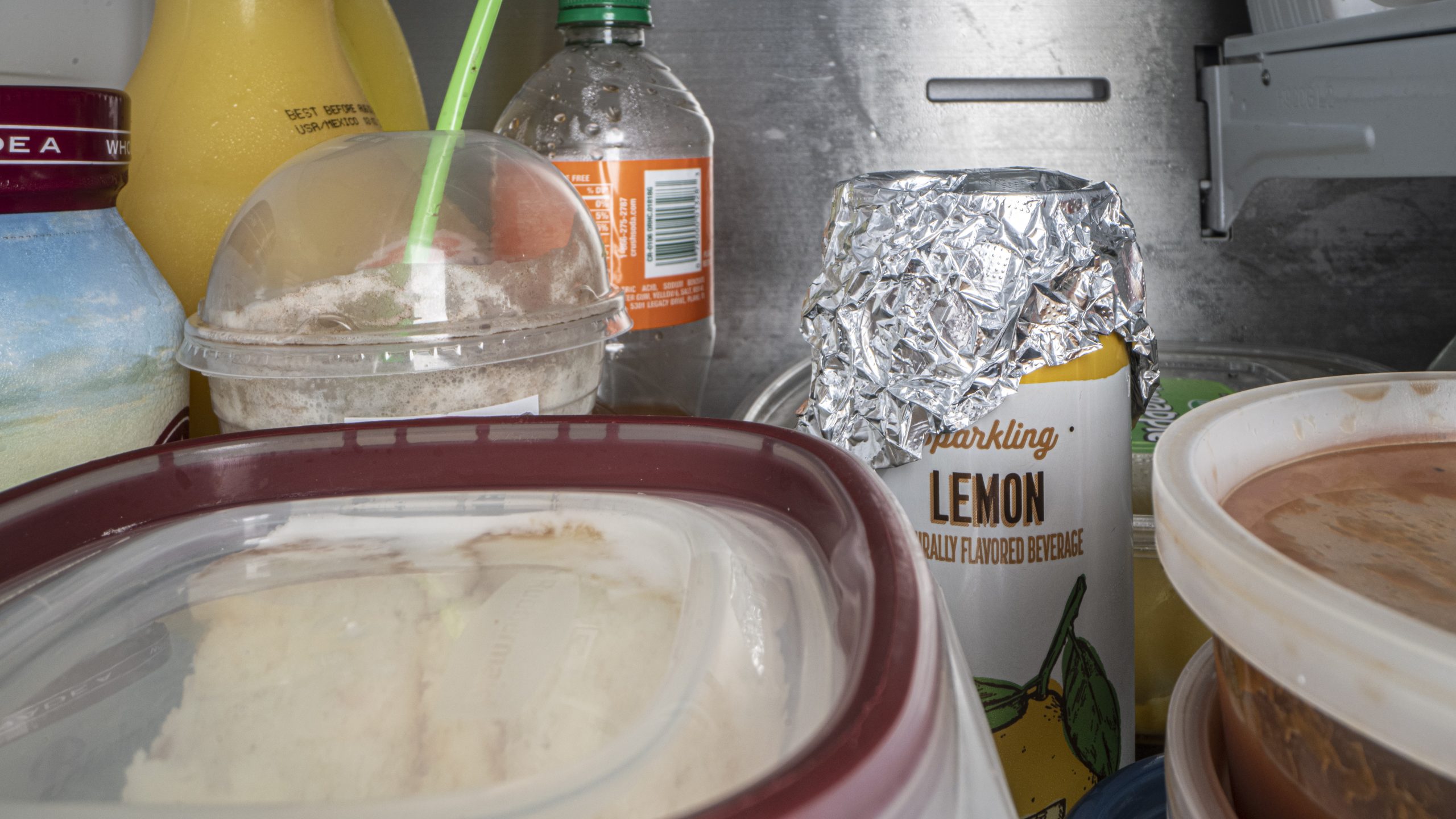
In-body photo: Food Safety - Cut Waste in Refrigerators (20200608-FSIS-LSC-0115).jpg by USDAgov, public domain.
Featured image: Hisense, IFA 2018, Berlin (P1070193) by Matti Blume, CC BY-SA 4.0.
