
You open the door after a cycle and there's dirty water sitting in the bottom of the tub. It's tempting to assume the pump has died, or to reach for a bottle of drain cleaner. GE Appliances says not to use drain cleaner in the dishwasher. The brand help pages start somewhere simpler: the filter, the drain hose, and the sink or garburator the dishwasher drains into.
The checks below go from easiest to hardest. The last few tell you whether to call an appliance technician or a plumber. We cover homes in Surrey, Langley, White Rock and Delta.
Key Takeaways
- A little water in the sump can be normal on some models. Water covering the tub floor, or sitting near the door, isn't.
- Start with the easy checks: confirm the cycle finished, then clean and reseat the filter before you look under the sink.
- Under the sink, check the drain hose, the air gap or high loop, and the garburator. After a new garburator goes in, make sure its knockout plug was removed.
- Don't use drain cleaner in the dishwasher, and never put your hand inside a garburator.
- If the pump hums without moving water, stays silent, or a drain code comes back after these checks, book a technician. We offer same or next day visits when a slot is free.
Is a little water in the dishwasher normal?
Sometimes. A shallow amount in the sump or filter area can be normal. A pool across the tub floor, or water up near the door, means something is holding the water in.
On models without an Ultra Fine filter at the bottom of the tub, GE says 1 to 2 cups of clean water covering the bottom of the tub is normal. On models with an Ultra Fine filter, water in the sump (the filter area) is normal, but it shouldn't cover the bottom of the tub. Your manual will tell you which kind of filter you have. The sump is the recessed well near the filter, as KitchenAid describes it.
KitchenAid's drain guide gives a few clues about how serious the problem is:
- Water slightly above the filter screen often indicates a partial restriction in the filter, sump or hose.
- Water near the door opening suggests a severe blockage or a pump that isn't running.
- A steady hum with no water movement points to a jammed impeller or an obstruction in the pump.
- Grinding noises can mean hard debris, such as glass, is in the pump area.
Clean, shallow water that matches your model's normal amount doesn't need a repair. Dirty water, food bits or a flooded tub means it's time for the checks below.
Checks to try when your dishwasher won't drain, in order
Work from the easiest and safest check toward the pump. Before you reach into the tub or under the sink, turn off power to the dishwasher at the circuit breaker. KitchenAid says not to rely on the control panel alone, and to shut off the water supply at the valve under the sink.
- Confirm the cycle finished. Frigidaire asks owners to make sure the cycle is complete and not paused. A machine that stopped partway through will still have water in it.
- Bail out the standing water. KitchenAid suggests absorbent towels, a small bucket or pan, and a turkey baster or hand pump for the water in the sump.
- Clean and reseat the filter. Bosch says the most common reason for a dishwasher to stop draining is food debris clogged in the filter or the water pump. Remove the filter the way your manual shows and clear out anything trapped in it. Then clean it with soap and a soft brush under running water. GE also says to make sure no paper or large object is covering the sump, and Frigidaire says the filter has to be installed properly.
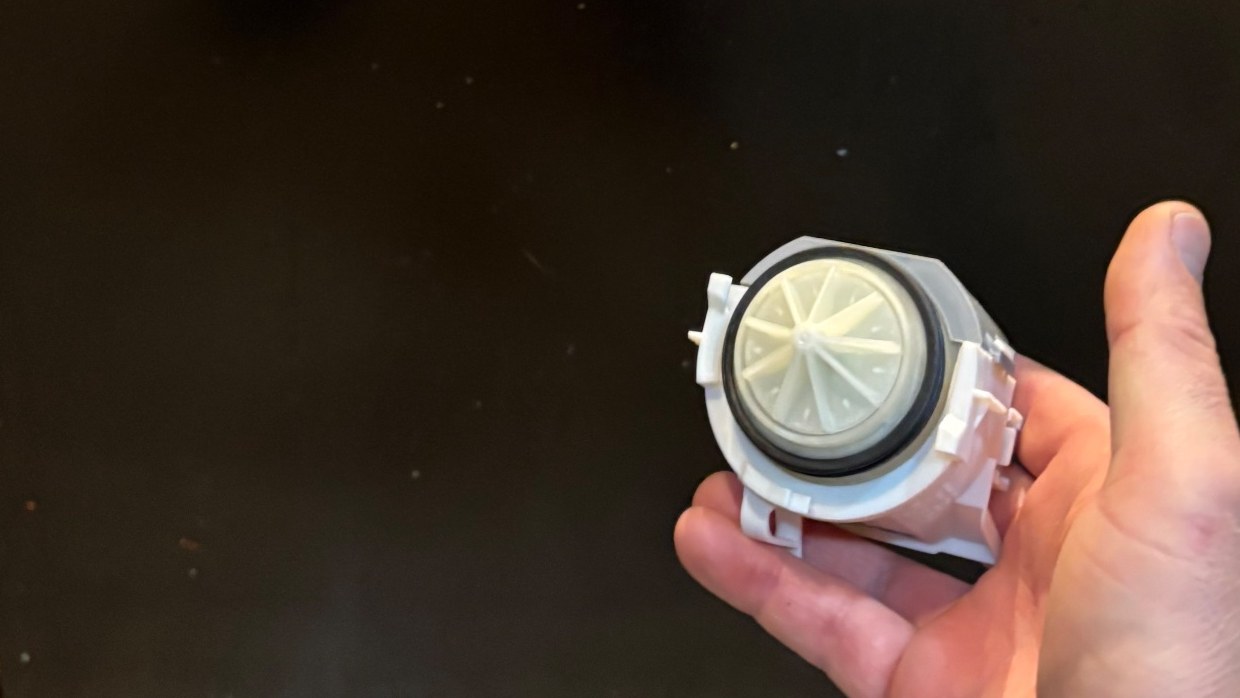
- Look under the pump cover, but only if your manual covers it. Bosch tells owners to remove the pump cover by following the manual, check the pump, and remove any debris and standing water with a sponge. Use caution, because Bosch warns some debris may be sharp.
- Check the drain hose. Samsung Canada says to make sure the drain hose connected to the sink isn't compressed, twisted or damaged, and to straighten any kinks. GE adds that re-using old, worn drain hoses may promote kinking or a blockage.
- Check the air gap or high loop. If an air gap is installed, GE says to remove its cap and clean out any build-up of debris. If there's no air gap, the drain hose must have a high drain loop attached to the underside of the counter, at the height given in the dishwasher's installation instructions.
- Run the garburator and check the knockout plug. If the hose connects to a garburator, GE says to run the disposer to clear the drain system. GE also says not to put your hands into it, as a serious injury could occur. The knockout plug is a plug in the garburator's dishwasher inlet. If the garburator was recently installed or replaced, make sure it was removed. Frigidaire and KitchenAid give the same advice about the knockout plug.
- Test the sink. Samsung Canada says to run water in the sink for 30 seconds. If the sink fails to drain, the issue likely lies with the house's plumbing, and Samsung says to consult a plumber.
One more thing to rule out is the soap. GE says using the wrong type or too much detergent can cause over-sudsing that can prevent the dishwasher from draining properly.
If the garburator itself is jammed or won't run, that's its own repair. Our page on garburator or garbage disposal repair covers it. And if you're wondering whether your water plays a part in film or buildup, our guide to hard and soft water in Metro Vancouver covers that separately.
Just moved in? Add a full cycle to your move-in appliance checks and look in the tub when it ends.
Drain pump, error codes and when to stop
Say the filter, hose, air gap, garburator and sink are all clear, and the tub still won't empty. Then the fault is likely inside the machine: the drain pump, its impeller, or the controls. That's where owner checks should stop.
KitchenAid says that if the cycle pauses without the drain pump engaging, the cause may be electrical or control-related. A hum with no water movement points to a jammed impeller or something stuck in the pump. Neither is something to test with the power on.
Many dishwashers show a code when they can't drain. Write the code down before you reset anything, and don't keep clearing it and restarting. A few examples from the brands' own pages:
- Bosch E24: Bosch's E24 page ties the code to a clogged drain filter and a dishwasher that isn't draining. Its checks include a sealed siphon connection and a pump cover that may be loose.
- Bosch E25: Bosch's E25 page says the code means the drain pump is blocked, or its cover is loose or missing. Bosch says the pump cover sits at the bottom of the dishwasher underneath the filter, so start there.
- Whirlpool F9 E1: Whirlpool lists the potential cause as a long drain, and says to clean the filter and check for a kinked, pinched or clogged drain hose.
- LG OE: LG says poor drainage or an OE code is usually caused by clogged food debris inside the dishwasher, or an installation issue such as a kinked drain hose.
We'll cover brand error codes in more depth in a later post. For now, if a code comes back after the checks above, book a visit and tell us the code when you call.
What our repair records show
Drain phrases are the most common note on the dishwasher jobs we've attended. Our dishwasher job records from January 2024 to October 2026 cover 2,685 dishwasher jobs. Drain phrases appear on 22.9% of them, ahead of leak phrases at 18.3% and error-code notes at 17.3%.
Among brands with 100 or more dishwasher jobs, Miele's drain share was the highest at 36.2%. Bosch, the volume leader with 347 jobs, had a drain share of 30.0%.
These are shares of jobs we attended, not failure rates for every dishwasher on the market. A drain note also doesn't tell you which part was at fault, which is why the checks above come first.
Symptom, check and next step
Each row below comes from the brand advice above.
| What you see | What to check | Next step |
|---|---|---|
| Shallow, clean water in the filter area | Your model's normal amount (GE) | Usually no repair needed |
| Water slightly above the filter screen | Filter, sump and hose (KitchenAid) | Clean the filter and sump, then check the hose |
| Water near the door opening | Severe blockage or a pump that isn't running (KitchenAid) | Work through every check, then book if it stays |
| Stopped draining right after a new garburator | Knockout plug inside the garburator (GE, Frigidaire, KitchenAid) | Remove the plug as the garburator's instructions show |
| Sink won't drain either | House plumbing (Samsung Canada) | Call a plumber |
| Pump hums, stays silent, or a drain code returns | Drain pump, impeller or controls (KitchenAid) | Book a technician |
Keeping the drain clear between cycles
A few everyday habits make a repeat clog less likely:
- Run the garburator before you start the dishwasher. GE says to always turn on the disposer first. That clears food and debris out of the drain the two appliances share.
- Clean the filter on a regular schedule, not only when water sits in the tub. Bosch says food debris in the filter or pump is the most common reason a dishwasher stops draining. That's why it calls regular cleaning important.
- Use the new drain hose whenever a dishwasher is replaced. GE says to use the drain hose that comes with a new dishwasher. Old, worn hoses may lead to kinks or a blockage.
When to book a technician
Book a visit if the tub still holds water after these checks, the pump hums or stays silent, you hear grinding, or a drain code keeps coming back. Our Red Seal technicians handle dishwasher repair in Surrey, Langley, White Rock and Delta, with same or next day visits when a slot is free.
The visit starts with a $100 diagnostic for every brand, credited toward your repair labour, as listed on our rates page. Completed repairs carry a 3 month guarantee on parts and labour.
When you call, have the brand, the model and any code on the display ready. Tell us which of the checks above you've already tried. Tell us whether the pump hums, stays silent or grinds. That information helps us prepare for the appointment.
Book online or call 778-488-8751.
Dishwasher drain questions
Is a little water in the bottom of the dishwasher normal? Often, yes, if it's clean and within your model's normal amount. GE's limits are in the first section above.
Should I use drain cleaner in the dishwasher? No. KitchenAid says drain-opening chemicals can damage components and create safety hazards.
Why did my dishwasher stop draining after a new garburator was installed? Check the knockout plug. KitchenAid says a retained plug blocks drainage completely.
What does a drain error code mean? It depends on the brand. On a Bosch, E24 points to a blocked drain filter, while E25 points to a blocked drain pump or a loose pump cover. Whirlpool's F9 E1 points to a long drain. Note the code, check your brand's help page, and book a visit if it returns.
Start with the cycle, the water level and the filter, then move under the sink to the hose, the air gap or high loop, the garburator and the sink drain. If all of that is clear and your dishwasher still won't drain, it's time for a technician.
Featured image: Geschirrspueler mit Rohrheizkoerper by Cschirp, CC BY-SA 3.0, via Wikimedia Commons. Cropped and resized.
